
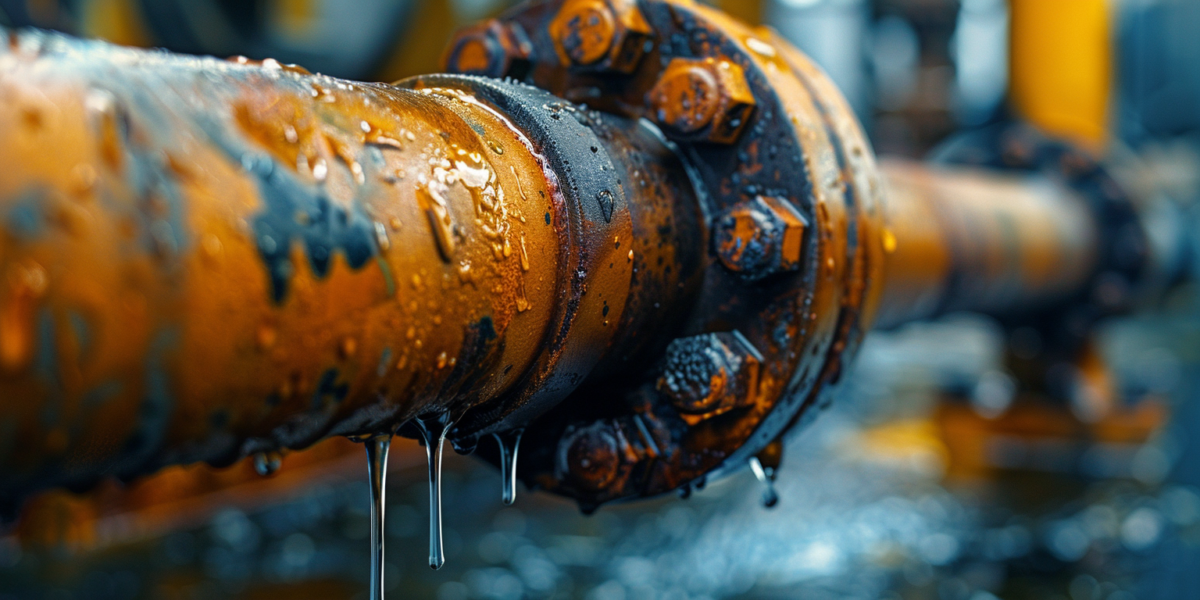
During long-term operation of a plate heat exchanger, problems arise with its efficiency due to internal and external leakage. This is a typical problem for this type of equipment, where two media are in contact with each other through the plates. Leaks are usually associated with damage to the plates or seals of the heat exchanger. It remains to be found out why heat exchangers leak?
Heat exchanger leaks: common causes
Here are some of the main reasons why a heat exchanger may leak:
- Mechanical damage or wear of the plates can lead to the formation of cracks or holes through which internal flows begin.
- If the seals between the heat exchanger plates become worn or deformed, this can lead to fluid leakage both from the outside of the heat exchanger and inside it (for example, sometimes you can observe oil flowing from the heat exchanger).
- With insufficient corrosion protection, the metal plates can break down over time, which leads to the formation of leaks (for example, using a plate material that does not match the aggressiveness of the media involved in the heat exchange process; specifically, using AISI 316 or AISI 304 stainless steel instead of titanium in the heat exchanger of ship cooling systems, where one of the media is aggressive seawater).
- Improper installation or assembly of the heat exchanger can create places with poor tightness through which leakage can occur.
- If the coolant pressure exceeds the permissible limits, this can cause damage to the seals in the collapsible heat exchanger or their “squeezing” out of the grooves, which will lead to leaks.
- Unprofessional repair or replacement of components (for example, rubber seals) without following standards can lead to the heat exchanger leaking.
- These include mechanical damage (for example, scale inside the heat exchanger), vibrations, water hammer, temperature drops, incorrect commissioning of the heat exchanger (for example, the mistake is to first supply steam, and only then the medium to be heated) and other factors that can affect the integrity of the heat exchanger.
These reasons are important to consider during maintenance and operation of plate heat exchangers to avoid problems with their operation and ensure a long service life.
How and why material fatigue occurs
Material fatigue occurs when a heat exchanger is operated under cyclic load and temperature conditions. Here are the main reasons:
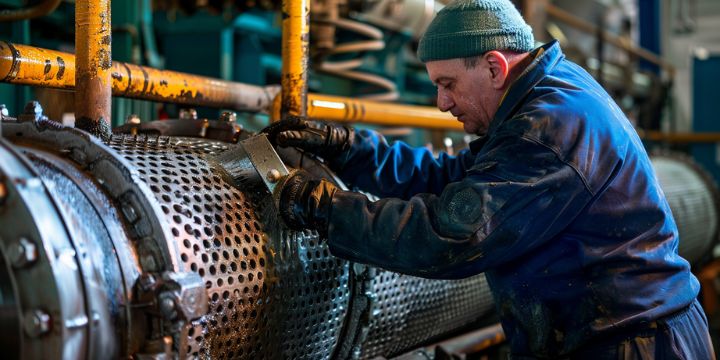 Heat exchangers are often subjected to cyclic temperature changes due to the heating and cooling of the working media. These temperature changes can cause expansion and contraction of the materials, which can lead to fatigue over time.
- Under the influence of pressure and temperature changes, the materials of the heat exchanger are deformed.
- Vibrations and impacts on the connecting elements or fasteners can also lead to fatigue of the materials, especially if they are not distributed evenly throughout the heat exchanger structure.
- If the heat exchanger is operated in an aggressive environment, for example in the presence of corrosive substances or chemically aggressive working fluids, this can accelerate the fatigue process of the materials.
The mechanism of material fatigue in a heat exchanger is similar to fatigue in other engineering structures. Therefore, it is important to properly design and operate a heat exchanger to minimize the risk of material fatigue and ensure its long and reliable service life.
Types of corrosion and prevention methods
Metal corrosion is the process of chemical or electrochemical destruction of a metal structure under the influence of the environment. It can be caused by physical, mechanical or biological factors.
The following types of corrosion are often found in plate heat exchangers:
- Uniform corrosion – macroscopically uniform destruction of a metal over its entire surface under the influence of the environment.
- Crevice corrosion occurs in narrow gaps and closed areas of the metal surface, which leads to intensive destruction in these areas.
- Contact corrosion occurs during the contact of two metals or alloys with different potentials in a dissolving electrolyte, which leads to different corrosion rates of metals in this contact.
- Erosion corrosion accelerates the corrosion process due to the relative motion of the medium and the metal surface, which leads to increased destruction.
- Selective corrosion – the preferential destruction of certain elements of an alloy under the influence of corrosion is called selective corrosion.
- Pitting corrosion is the concentration of corrosion in small points on the surface of the metal.
- Intergranular corrosion – the erosion of the grain boundaries of a metal or alloy, while the grain itself is less susceptible to corrosion, is called intergranular corrosion.
- Hydrogen corrosion – the penetration of hydrogen into a metal through corrosion or other processes can lead to its destruction.
- Stress corrosion cracking (SCC) and corrosion fatigue – the destruction of a material due to corrosion and tensile stress in a metal-environment system.
Here are some methods for preventing corrosion in plate heat exchangers:
- The use of corrosion-resistant materials in a specific working environment can significantly reduce the risk of corrosion. For example, the use of stainless steel or specialized alloys with good corrosion resistance.
- Applying protective coatings to the surface of the heat exchanger. For example, epoxy coatings, polymer films or ceramic coatings.
- Maintaining stable temperature and pressure conditions inside the heat exchanger can reduce the likelihood of corrosion due to thermal and mechanical stress.
- Regularly checking the condition of the heat exchanger, cleaning it and removing deposits.
- Adding special anti-corrosion additives to the working environment or water can help protect the metal from destruction.
These methods can also be used in combination to provide effective protection against various types of corrosion in plate heat exchangers.
Operational errors leading to leaks
Improper use can have serious consequences for the equipment. Frequent and abrupt switching of operating modes, especially without appropriate periodic maintenance and parameter control, causes wear of elements and shortens the service life.
Exceeding permissible parameters, such as pressure and temperature, not only increases the risk of breakdowns, but can also negatively affect the efficiency of the equipment.
Regular maintenance and compliance with operating recommendations will help keep the equipment in good condition and extend its service life.
Methods for detecting leaks in plate heat exchangers
There are certain effective methods for checking a heat exchanger for leaks. Let’s consider the main ones in more detail.
Visual inspection
The first step in detecting leaks in plate heat exchangers is a visual inspection. It allows you to detect obvious signs of wear, damage or corrosion on the surface of the plates. The most important areas for careful inspection are the sealing rubber seals and the joints.
During a visual inspection, we can only identify external leaks in the heat exchanger.
As we said earlier, along with external leaks in the heat exchanger, there are internal overflows. This is especially dangerous in the food industry, when one of the media flows into the food liquid. As a result, we observe a deterioration in the taste properties of the food liquid.
Internal leaks are quite difficult to detect during heat exchanger operation. We recommend monitoring the pressure for both media. Check the quality of the fluids involved in heat exchange. If there is a suspicion of internal leakage, we recommend disconnecting the heat exchanger from one of the media. If there is internal leakage, the second media will accumulate in the heat exchanger cavity disconnected from the process.
The cause of internal overflows is the integrity of the plates is broken (corrosion, cracking, etc.) or the heat exchanger sealing ring is torn.
Pressure test methods and significance
Pressure tests include strength and leak tests, where the heat exchanger is subjected to pressure to detect whether the plate heat exchanger is leaking or there is possible deformation in it.
This test is as follows:
Liquid is supplied to one of the cavities of the heat exchanger, creating a pressure inside of P=1.3 PP. If no leakage is visually detected (inside the other cavity or outside) and the pressure gauge shows the same pressure for 15 minutes, the heat exchanger can be considered tested and ready for operation.
Dye test
An additional method of leak detection is the dye test. In this case, a special dye solution is fed into the system, which detects leaks by the appearance of colored liquid on the surface of the heat exchanger.
How to fix a plate heat exchanger leak
Let’s consider what methods are used to eliminate such problems. This will help if, for example, oil is leaking from the heat exchanger.
Temporary measures
If you discover, for example, a grease leak from a heat exchanger, you must immediately take temporary measures to prevent further damage.
- It is necessary to visually determine the location of the oil leak from the heat exchanger. If the leak is visually determined, you need to check whether the seal has come out.
- If the seal has come out, it is necessary to stop the heat exchanger. Disassemble it. Insert the fallen seal into the groove of the heat exchanger plate. Assemble the heat exchanger. Tighten the studs so that the width of the heat exchanger plate pack corresponds to the Amax size or slightly less. Start the heat exchanger. If it leaks, it is allowed to tighten the plate pack a little more.
- If no seals are visually found that have come out, then it is allowed to slightly tighten the plate package.
- It is necessary to visually determine the location of the oil leak from the heat exchanger. If the leak is visually determined, you need to check whether the seal has come out.
- Attention! It is permissible to tighten the plate package up to the Amin size, no more, as the plates will be damaged.
- From the above it follows that a temporary measure is to tighten the plate package to a size smaller than the initial value.
- It happens that due to vibration or other reasons, the pins loosen and the width of the plate pack turns out to be greater than Amax. In this case, it is necessary to simply tighten the plate pack to the size of Amax or slightly less.
Long-term repairs
If temporary measures do not work, the heat exchanger must be put on long-term repair, which will involve disassembling the heat exchanger, finding the location of the damage (plates, seals) and replacing the damaged plates or seals. Long-term repair will help resolve the issue of how to eliminate leaks in the heat exchanger.
Tips for preventing leaks in heat exchangers
One of the main tips for preventing leaks in heat exchangers is to regularly maintain and upgrade your heat exchanger.
Regular maintenance
 Regular maintenance is an important step to prevent plate heat exchanger leaks. It includes several steps:
- Regular cleaning of the heat exchanger from deposits, dirt and corrosion helps to maintain its efficiency and tightness.
- Checking the pressure in the heat exchanger allows you to detect possible leaks or deformations.
- Worn seals, gaskets, fittings and other parts can be the source of the flow in the plate heat exchanger. Replacing these parts according to the manufacturer’s recommendations helps to prevent leaks and maintain reliable operation of the heat exchanger.
Special attention should be paid to sealing materials if heat exchanger gaskets are leaking. Their timely replacement plays a key role in preventing leaks.
Heat exchanger modernization and replacement
It is important to consider upgrading or replacing the heat exchanger as necessary. New technologies and materials can improve efficiency and reduce the risk of leaks, especially in older or worn systems.
If you find a leak yourself or simply suspect it, the best solution is to contact a professional who will promptly fix the problem and diagnose the equipment.
How to understand that the heat exchanger is leaking?
One of the main signs of a leak in the heat exchanger can be a decrease in its efficiency. If you notice that the system is not maintaining the required temperature or there is an external leakage of working fluid, this may indicate a problem with the heat exchanger. Also, pay attention to possible traces of fluid around the equipment.
What happens if the heat exchanger leaks?
A leak in a heat exchanger can lead to reduced heat transfer efficiency and increased fluid consumption. It can also result in heat loss, equipment damage, and additional repair or replacement costs.
How to understand that the heat exchanger is flowing?
There are several methods you can use to identify a leak in a heat exchanger. A visual inspection will help you identify obvious signs of damage or wear on the surface of the plates. Also, watch for changes in system performance, such as reduced efficiency or unusual noises, which could indicate a leak.
Last Updated on by Микола Фролкин