
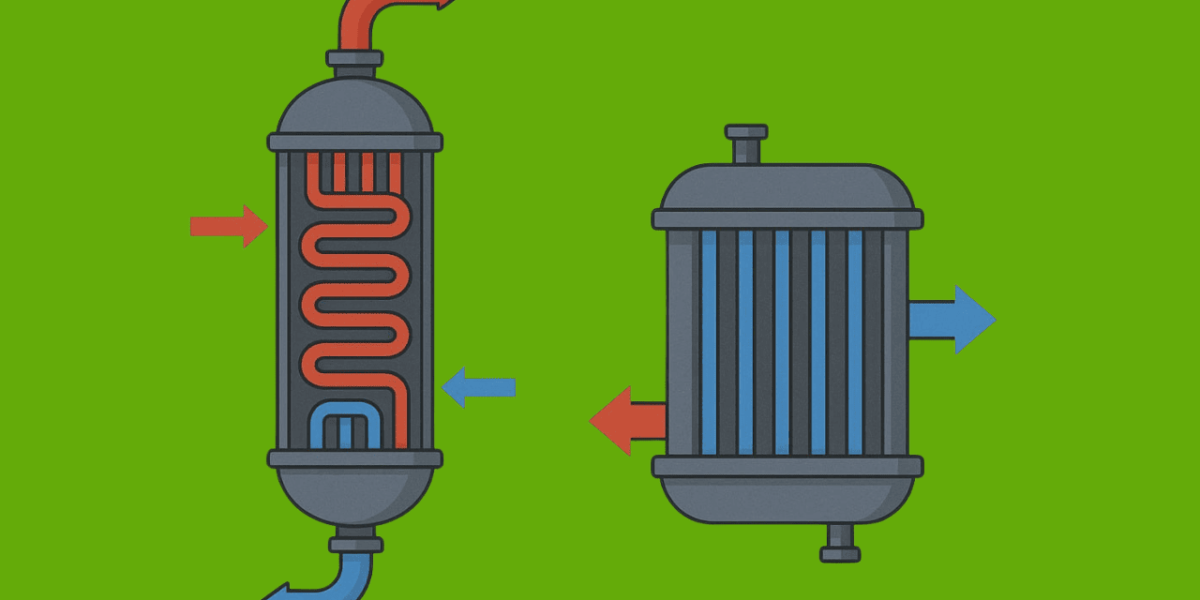
In the thermodynamics of a steam cycle, a heat exchanger is a key element that ensures efficient transfer and redistribution of thermal energy between working media. Among the varieties used in power plants, the economizer and the condenser occupy a special place. The former, in particular the feedwater economizer, is used for preheating the feedwater by utilizing the heat of flue gases; the latter serves to condense the exhaust steam and maintain a vacuum at the turbine outlet. Industrial systems also employ additional heat-exchange units, such as the superheater, which raises the steam temperature above the saturation point to increase turbine efficiency.
The correct selection of heat-exchange equipment critically affects the economy and reliability of the power system. A mismatch with the design parameters leads to increased fuel consumption, accelerated wear of units, and a decrease in overall efficiency. Properly designed feedwater economizers and condensers make it possible to maximize the potential of thermal regeneration, reduce energy losses, and improve the stability of operating modes.
The impact on the efficiency of the installation is direct: the economizer reduces the need for additional heat input to the boiler, while the condenser decreases the back pressure in the turbine, increasing the useful work of steam. Together, these elements can provide an efficiency gain of several percentage points, which for large power units means significant fuel savings.
The scope of application covers a wide range of facilities from large CHP plants and boiler houses to steam turbines in industrial production. Here, heat exchangers serve not only the function of heat transfer but also as a strategic tool for improving the efficiency and durability of the entire system.
What is a steam cycle?
The steam cycle is the basis for the operation of most thermal power plants and industrial steam turbine units. It is an ordered sequence of processes of converting thermal energy into mechanical and electrical energy, in which the key working fluid is water steam. To make the cycle closed and energy-efficient, special units are used — the steam heat exchanger, the economizer, and the condenser, which ensure optimal use of heat and the return of the working medium to its initial state.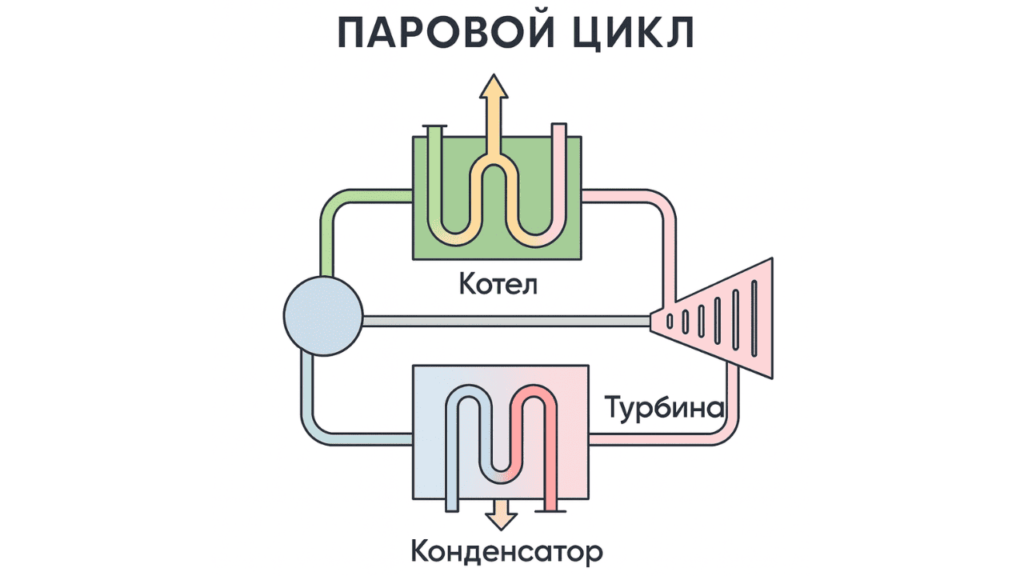
Purpose and features
A steam cycle is a closed thermodynamic process in which water steam is used as the working fluid to convert thermal energy into mechanical, and then into electrical energy. In the simplest version, it includes the sequence: boiler → turbine → condenser → feedwater heating → boiler.
In the boiler, water is converted into steam, in the turbine it expands and releases energy, in the condenser the steam is condensed with a phase transition into water, and then the heated or preheated feedwater is returned to the boiler. Without heat exchangers, such a process would be less efficient and more fuel-consuming.
The role of heat exchangers in steam systems
In the steam cycle, various types of heat-exchange devices play a key role, including the steam heat exchanger and the steam-water heat exchanger.
The operating principle of the economizer is based on using the heat of flue gases or steam to preheat the feedwater before the boiler. This reduces the need for additional heating and decreases fuel consumption.
The condenser closes the cycle by turning the exhaust water steam back into water, which allows it to be reused in the system. This phase transition is accompanied by the release of heat, which can be partially recovered in other processes.
The efficiency of these heat exchangers is directly related to the overall efficiency of the plant: the higher the efficiency of heat transfer, the lower the energy losses and the more stable the operation of the entire steam cycle.
General classification of heat exchangers
Heat exchangers are equipment in which heat is transferred from one flow to another without their direct mixing. In steam cycles, they function as steam condensers and ensure efficient operation of the plant by reducing heat losses and optimizing the operating modes of the equipment. The steam-water heat exchanger is one of the most in-demand options, allowing heat transfer through the phase transition from steam to water for feedwater preheating or technological needs.
The principle of operation of heat exchangers
The operation of any heat exchanger is based on heat transfer through a wall separating two heat carriers. One flow gives off heat (the heated medium, for example steam), and the other absorbs it (water or another working agent). The efficiency of the process depends on the temperature difference — the temperature gradient between the hot and cold flows.
For steam systems, a steam heat exchanger is often used, where water steam serves as the heat source. Such a unit can be implemented as a shell-and-tube apparatus or as a steam plate heat exchanger, which is compact, provides a high degree of heat transfer, and is easy to maintain.
Main types of heat exchangers
Various design solutions make it possible to adapt heat exchangers to specific tasks — from feedwater preheating to process heating. The table shows a generalized classification:
| Type of heat exchanger | Description and features | Application in the steam cycle |
|---|---|---|
| Shell-and-tube steam-water heat exchanger | A classical design with a tube bundle through which one flow passes, while the other flows through the shell. | Feedwater heating, steam heat recovery |
| Steam plate heat exchanger | A compact assembly of plates with high heat transfer | Heating of process water, heating systems |
| Spiral heat exchanger | Wound channels provide compactness and high efficiency | Heat recovery in space-constrained systems |
| Immersion heat exchanger | Heat transfer through tubular coils immersed in liquid | Heating of boilers, water tanks |
Each type is selected based on the required capacity, available space, and the characteristics of the steam system. A properly chosen heat exchanger makes it possible to minimize heat losses and increase the overall efficiency of the plant.
An economizer in the steam cycle — what is it for
The economizer is an element of the system without which modern thermal power engineering is unthinkable. It is part of the boiler unit or steam generator and is used for preheating water using the heat of flue gases or steam. In large power complexes, such as CHP plants, this unit is an integral part of the chain that involves steam-water heat exchangers, turbine equipment, and auxiliary systems. Its task is to save fuel, increase efficiency, and ensure the stable operation of the entire complex of power equipment.
Purpose and functions of the economizer
The main function of the economizer is to utilize residual heat from the gas path or other sources to preheat the feedwater before it is supplied to the boiler or steam generator. This reduces the cost of primary heating and lowers the thermal load on the furnace.
In addition, the economizer improves the operating conditions of other units — for example, it extends the service life of boiler tubes, reduces thermal stresses, and increases the efficiency of steam-water heat exchangers that work in conjunction with it. In modern schemes, a condensing heat exchanger is sometimes used as well, capable of extracting additional heat below the dew point and improving the overall heat balance.
Design and principle of operation
Structurally, the economizer is a system of tubes or sections with an extended heat-transfer surface, through which water flows while being surrounded on the outside by hot gases or steam. The principle of operation is simple: the temperature difference between the flows provides a counterflow of heat transfer — from the hot medium to the cold one through the tube walls.
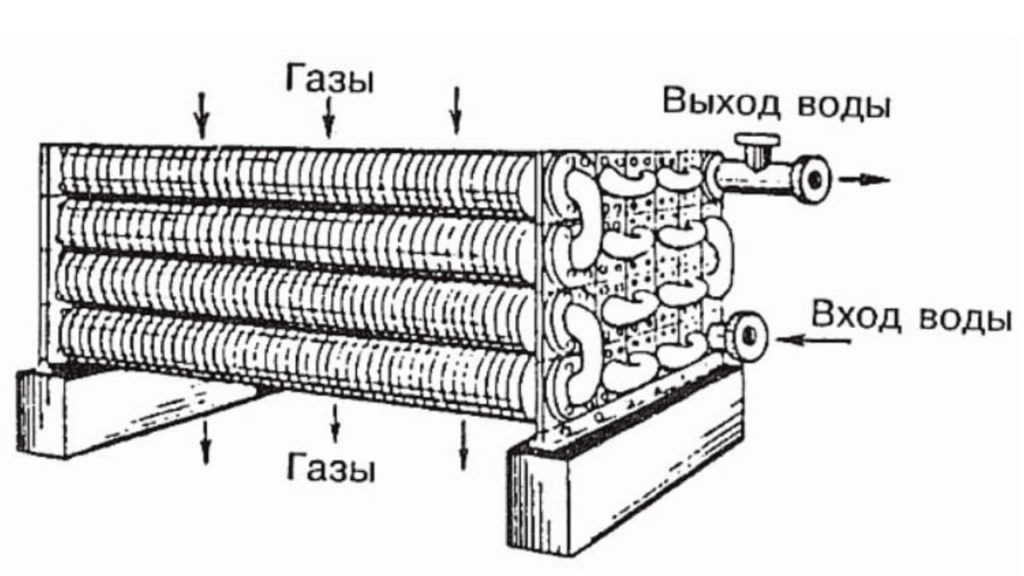
In a boiler unit, the economizer is located after the superheater and before the chimney, in order to utilize the maximum amount of low-potential heat before it is released into the atmosphere. The unit may also include a condenser heat exchanger if it operates within a unified recovery scheme together with turbine equipment.
Water and gas economizers
Water economizers are the classic solution, where heat from flue gases or steam is transferred directly to water. They are effective in combination with steam-water heat exchangers and are used in almost all industrial boiler houses and CHP plants.
Advantages of using economizers
The use of economizers provides a whole range of advantages:
- Increase in the efficiency of the boiler unit and the entire steam cycle.
- Reduction of fuel consumption and operating costs.
- Improvement of operating conditions of the steam generator and turbine equipment.
- Possibility of integration with condensing systems and plate condensers for maximum heat recovery.
- Reduction of emissions into the atmosphere due to the lowering of flue gas temperature.
Thus, the economizer is not just an auxiliary unit but a strategically important element that directly affects the efficiency and environmental performance of the entire power system.
Types of economizers
Economizers are classified by the type of heat carrier, design, and operating conditions. In industrial boiler plants, water tube economizers are most often used, where the heat from flue gases is utilized to preheat the feedwater before it enters the boiler. In systems with a steam turbine, steam economizers may be installed, providing the utilization of exhaust steam for heating various process streams.
By design, the following are distinguished:
- Tube economizers — the classic solution for boiler units with a large heat transfer surface.
- Finned-tube and coil economizers — used where compactness and ease of maintenance are important.
- Condensing economizers — utilize heat below the dew point, often integrated with systems where there is a condenser heat exchanger or condenser. This makes it possible to use residual heat as much as possible, including in combination with a steam condenser.
The correct choice of economizer type depends on the parameters of the boiler unit, the temperature and composition of the gases, efficiency requirements, and operating conditions.
Operating and maintenance features
Economizers operate under high-temperature conditions and come into contact with aggressive media, so regular monitoring of the condition of the tubes and the condenser heat exchanger, if it is part of the overall scheme, is extremely important.
In systems with exhaust steam recovery, it is necessary to monitor parameter stability to avoid water hammer and thermal overloads. When operating in an industrial boiler house, special attention is paid to controlling the metal temperature relative to the dew point to prevent low-temperature corrosion.
Periodic maintenance includes cleaning from soot and scale, checking the tightness of connections, and monitoring the operation of auxiliary equipment — whether it is a steam condenser in the turbine section or an additional heat exchanger connected to the economizer.
Condensers in steam plants
The condenser is a key unit of any steam power plant, ensuring the closure of the cycle and the return of the working fluid to its initial state. It is directly connected to the operation of the turbine section and is often integrated into the district heating system at CHP plants. The design of the condenser includes tube bundles through which the cooling medium flows, while the unit itself serves as a large industrial heat exchanger operating on the phase transition of steam into water.
Role and functions of the condenser
The main task is the condensation of steam at the turbine outlet, which reduces back pressure and increases the useful work of the unit. At the same time, the resulting condensate is returned to the system through a secondary circuit to the boiler or feedwater heaters.
In addition to its primary purpose, the condenser heat exchanger is often used for heat recovery — part of the heat from the cooling water is directed to heating or technological needs. In schemes where the condenser is connected to the turbine heat exchanger or the heat exchanger of a CHP, it becomes an element of the integrated heat economy.
Principle of operation and heat balance
The principle of operation is based on the contact of the exhaust steam flow with cooling tubes, inside which water or another coolant moves. The steam boiler heat exchanger and the condenser are often combined through a regenerative heating system to utilize the heat of the phase transition.
During operation, heat is removed from the steam, cooling it below the saturation temperature and turning it into water. The balance between the amount of heat removed, the temperature of the cooling water, and the heat-exchange surface area determines the efficiency of the entire unit. For industrial heat exchangers, it is important to minimize heat losses and maintain a stable temperature gradient.
Types of steam condensers
Depending on the operating conditions and the requirements for the thermal scheme, the following are distinguished:
- Surface condensers (the classic option for a steam power plant and turbine) — water and steam do not mix, heat is transferred through the tube wall.
- Contact condensers — steam comes into direct contact with the cooling liquid.
- Condensers with heat recovery — part of the heat is used in a secondary circuit for heating, hot water supply, or technological processes.
- Condensers as part of a district heating system at CHP — combine the functions of cooling and heating of the network water.
Each type is selected based on turbine parameters, the regeneration scheme, and the possibilities of integration into the overall heat balance of the plant.
Tips for choosing heat exchangers for steam cycles
The correct selection of heat-exchange equipment for the steam cycle directly affects the efficiency of the entire system. When choosing, it is necessary to consider the design capacity, operating pressure, type of heat carrier, and connection scheme. For large facilities where a steam generator heat exchanger is used, the compatibility of units with each other and the possibility of integration into the overall thermal scheme are important.
Mistakes to avoid
A common mistake is selecting a heat exchanger “by eye or with a margin” without considering the actual parameters, which leads to excessive pressure losses and overspending. Equally dangerous is underestimating the corrosion resistance of materials, especially when working with aggressive media. Ignoring regular maintenance of the economizer or condenser also reduces the service life of the equipment and decreases the efficiency of the system.
Custom design should be ordered if the system is non-standard in terms of parameters — for example, when operating under high temperatures, unstable loads, or the need to recover exhaust heat in several circuits.
Why you should buy a heat exchanger from the company “Teplo-Polis”
The company “Teplo-Polis” is a supplier that offers integrated solutions for energy and industry. Here you can purchase heat exchangers integrated into boiler units and heat recovery systems, including steam generator heat exchangers and specialized models for economizers and condensers.
Advantages of cooperation with Teplo-Polis:
- Experience with projects for CHP plants, industrial boiler houses, and turbine units.
- Selection of the optimal model for specific technical conditions.
- Use of only certified materials and proven technologies.
The company’s engineers take into account all parameters of your system — from temperature and pressure to equipment layout — and select a heat exchanger that ensures maximum efficiency. If necessary, the design is adapted for non-standard tasks, including integration with heat recovery systems and economizer maintenance.
All supplied equipment is covered by the manufacturer’s warranty. The company provides regional delivery, installation, commissioning, and subsequent service support, including regular maintenance. This approach ensures stable operation of the equipment throughout its entire service life.
What types of steam heat exchangers are there?
Shell-and-tube, plate, spiral, steam-water, and condensing — the choice depends on the task and the parameters of the cycle.
Can a heat exchanger produce steam?
Yes, with sufficient temperature difference it can evaporate water and operate as a steam generator.
How often does economizer maintenance require?
At least once a year, and under heavy operating conditions — every 3–6 months with cleaning and leak testing.
Is it possible to use one heat exchanger for different media?
Yes, if the materials and design are rated for all intended media and parameters.
Where does the water go after the economizer?
Into the feedwater path of the boiler or steam generator for further heating and steam generation.
What types of steam condensers are there?
Surface, contact, with heat recovery, district heating.
Last Updated on by Микола Фролкин