
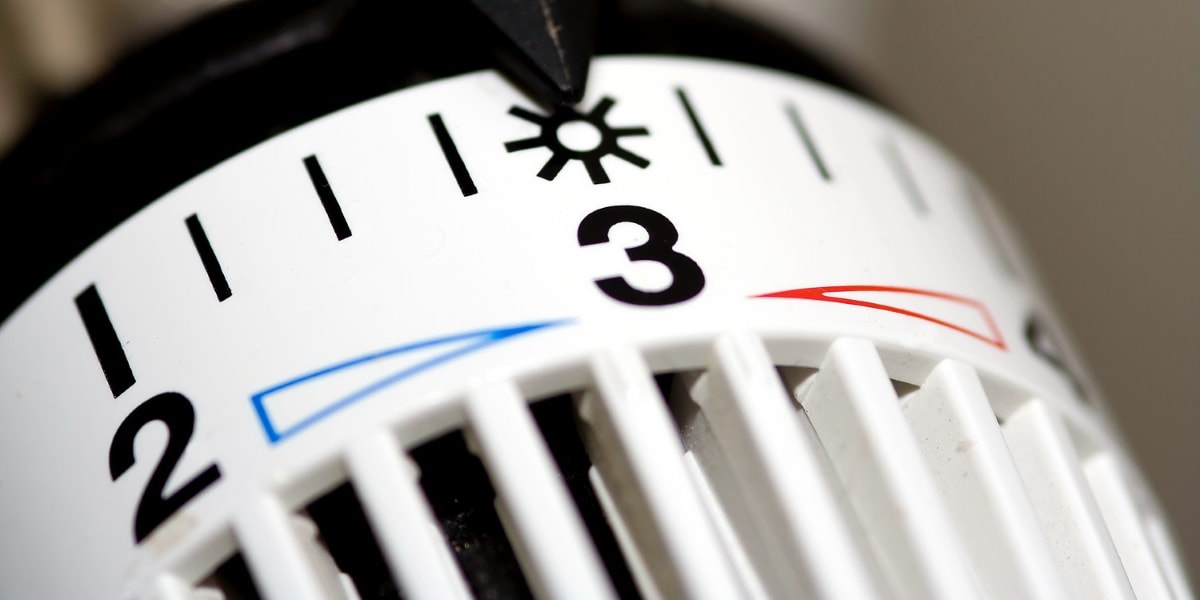
Individual heating units help to save heat
Individual heating points help save energy. The implementation of utilities reform requires the widespread adoption of innovative technologies. The key challenges in the sector include high resource consumption, outdated and worn-out equipment, and a lack of real incentives for consumers to save energy.
The modernization process involves equipping each building with an automated individual heating point (IHP), replacing outdated elevator nodes with modern modular blocks with mixing pumps, and switching to independent connections of building heating systems through plate heat exchangers.
To save thermal energy and other resources, it is necessary to monitor and regulate their consumption. Once a modular block (IHP) is installed in a building, the billing becomes transparent for both consumers and the resource supplying organization.
Moreover, the installation of a modular block (IHP) allows management companies to automate operations (dispatching) with subsequent optimization of staff.
The use of modular blocks (with mixing pumps or with plate heat exchangers) in residential buildings is characterized by simplicity and ease of maintenance, as well as high efficiency. Thermal energy metering equipment allows for the recording of consumed resources, and automated individual heating points enable the regulation and saving of their consumption. All this creates comfortable living conditions.
Plate heat exchangers are used not only for hot water supply but also for independent connections of heating systems. This allows consumers to be independent of external factors of the heat network (in the event of an accident on the heat network, the house’s circuit does not suffer), and to obtain optimal characteristics within the heating system (balancing per riser).
Let’s touch on the issue of manufacturing an individual heating point. An IHP can be:
- assemble in the basement;
- manufacture in a factory.
Let’s describe the advantages and disadvantages of each manufacturing method
- Assembling the ITP in the basement allows the equipment to be assembled using the space of this room and placing the components on the walls. In this case, it is possible to save on frame materials. However, this option has a number of pitfalls. Most often, the assembly of the heating station takes place in the summer, so it is impossible to conduct the necessary hydraulic tests, because there is no coolant with operating temperatures and pressure. At the beginning of the heating season, the consumer may encounter difficulties related to the operation of the ITP. The problems may be the following: valve seizure, seals in pumps, regulator, stop valves and heat exchangers may “leak”, there may be problems with temperature sensors and controller, etc.
- There are two disadvantages to assembling an ITP in a factory:
- its cost is higher due to the steel structure (frame) on which all the equipment is installed;
- the dimensions of the ITP in some cases do not allow it to be brought into the basement in one piece, so it is necessary to dismantle it by branches and bring it into the basement in parts.
This option has significant advantages: the factory-made IHP undergoes all the necessary hydraulic, thermal and electrical tests at the manufacturing company. In this case, the probability of failure of the individual heat supply unit tends to zero.
Our experience in the manufacture of plate heat exchangers and individual heating units allows us to say: a miser pays twice and a non-professional pays three times. So don’t be stingy and turn to professionals, i.e. to us.
I would like to draw your attention to some aspects when buying cheap equipment:
- There were cases when our competitors put cheap circulation pumps into the heating system in the dependent circuit. In the middle of the heating season the customer had to replace the existing Lowara pumps with WILO pumps supplied by us. The problem arose due to the purchase of cheaper pumps, where the seals do not withstand the operating temperature of the heating network.
- There was a case when the regulator valve stem “boiled”. The problem arose due to the purchase of a cheaper temperature controller.
- There was a case when a Chinese controller supplied by competitors started giving ridiculous orders to the ITP actuators.
- There was a case when the heat exchanger of the DHW system gave out the temperature of the heated medium 330C (with the norm – 550C). The problem arose due to the fact that our competitors made an incorrect calculation of the plate heat exchanger. The customer was penalized by the loss of comfort, as he was chasing low prices.
In any case, the customer should make a decision on the purchase of an automated individual heating unit on his own. Sometimes the pursuit of cheapness leads to the purchase of inefficient equipment with low quality. A good article about replacement of tubular heat exchangers with plate heat exchangers is written in the article Energy Safety in Documents and Facts No. 2, 2006.
Modular units supplied by Teplo-Polis:
- Modular block heating system O-80-100-530
- Modular block heating system O-125-150-1340
- Modular block heating system O-50-65-173
- Modular block heating system O-25-32-28
- Modular block heating system O-25-25-15
- Modular block heating system O-50-65-185
- Modular block heating system O-40-50-135
- Modular block heating system TO-16-50-65-313
- Modular block heating system O-65-65-290
- Modular block heating system O-50-65-160
- Modular block heating system O-50-65-183
- Modular block heating system O-50-65-167
- Modular block heating system O-65-65-314
- Modular block DHW system TGW-09/1ст-56
- Modular block DHW system TGW-09/1ст-35-TM
- Modular block DHW system TGW 09/1ст-184
- Modular block DHW system TGW-05/1ст-25
- Modular block TO-22-80-80-430-TM
- Modular block TO-16-65-287-TM
- Modular block TO-22-80-80-487-TM
- Modular block TO-22-80-80-411-TM
- Modular block TGW-22/1st-448
- Modular block TO-22-100-100-819
- and others.
How to buy an IHP
If you are ready to purchase a relatively inexpensive, high-quality IHP, turn to professionals. You can buy a heating point after its preliminary calculation. To do this, you need to fill out a questionnaire, or you can call us at the following phone numbers: (057) 751-96-97, (057) 752-44-29, (057) 752-44-30
Last Updated on by Микола Фролкин