
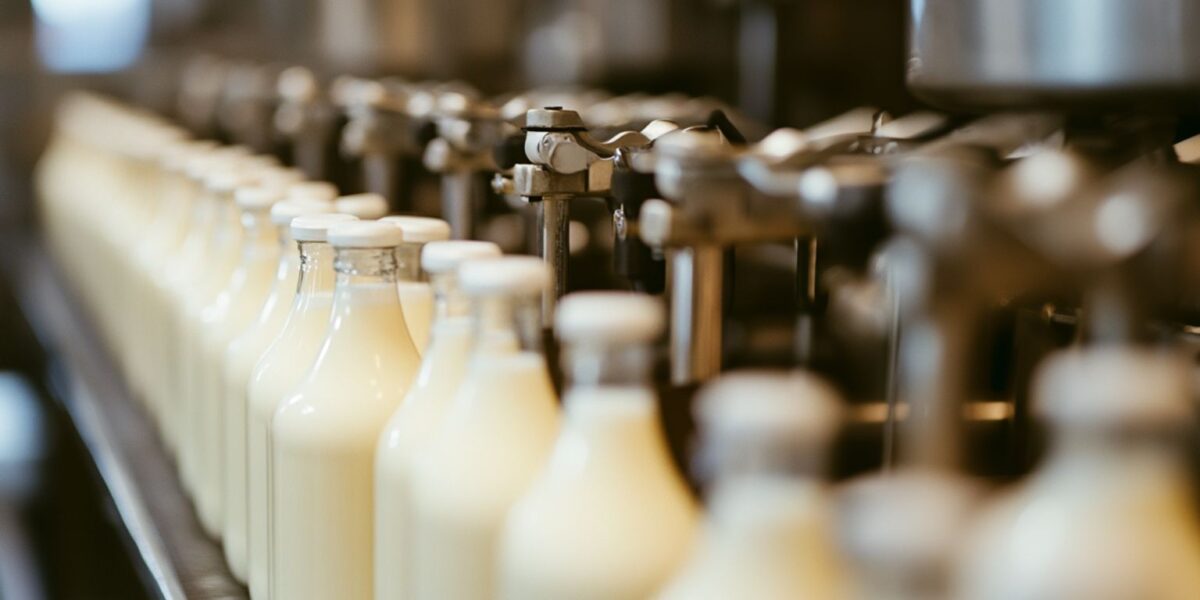
Пастеризація – це процес теплової обробки молока, за якого воно нагрівається до певної температури протягом певного часу з метою знищення патогенних мікроорганізмів.
What is a milk pasteurizer?
A milk pasteurizer is a device designed for special processing of products. It helps to preserve its quality, extend its shelf life and, most importantly, make it safe for consumption. The principle of the pasteurizer is to heat milk to a certain temperature (usually between 63°C and 85°C) for a short period of time, after which it is quickly cooled. This helps to kill harmful bacteria while preserving the milk’s nutrients and flavor.
Modern pasteurizers are equipped with automatic control systems that make the pasteurization process fast, efficient and safe. They help maintain consistent milk quality while ensuring compliance with food safety standards. The introduction of pasteurizers into production lines helps to minimize the risk of contamination of dairy products, ensuring their durability and safety for consumers.
Principle of milk pasteurizer operation
 The milk pasteurizer works on the principle of short-term heating and rapid cooling of the product. This allows for the effective destruction of pathogenic microorganisms.
The pasteurization process consists of several stages:
- The milk is first slowly heated to an intermediate temperature to avoid a sudden change in the structure of the product.
- In the next step, the milk is heated to a temperature that depends on the pasteurization method (usually between 63°C and 85°C). The time spent at this temperature varies from 15 seconds to several minutes.
- After heating, the milk is quickly cooled to a temperature of about 4°C, which prevents the growth of remaining microorganisms and preserves the freshness of the product.
- After cooling, the milk is filtered and goes to the packaging stage.
There are several types of pasteurization. They differ in temperature conditions and processing time:
- Traditional pasteurization (LTLT). Milk is heated to 63°C for 30 minutes. This method is less commonly used because it takes longer.
- Fast pasteurization (HTST). Milk is heated to 72°C for 15 seconds. This is the most common method used in the modern dairy industry.
- Ultra-high temperature (UHT). Heating milk to a temperature of 135°C for 2-4 seconds. This method provides a longer shelf life, but may slightly change the taste of the milk.
The most popular pasteurization method in the modern dairy industry is rapid pasteurization (HTST). It provides an optimal balance between bacteria killing efficiency, preservation of milk flavor, and is also the most cost-effective due to the speed of processing.
Types of milk pasteurizers
There are several types of pasteurizers, each of which differs in design and technological features of milk processing. They differ in their purpose. They can be either in the form of small installations for small farms or large industrial systems for mass production.
Laboratory pasteurizers
Laboratory pasteurizers are designed for small volumes of milk and are most often used in research or educational institutions. They allow for precise experiments and tests to study the effectiveness of pasteurization or to develop new methods of milk processing. They are compact and offer flexibility in temperature and processing time settings.
Industrial pasteurizers

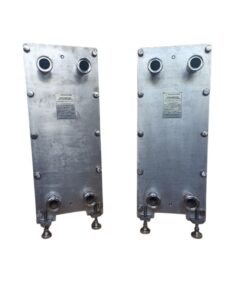
The industrial plate pasteurizer is designed to process large volumes of milk at dairies and other food processing enterprises. These machines usually contain automatic temperature and time control systems, which makes the pasteurization process more reliable and efficient. The industrial milk pasteurizer can operate in continuous and batch modes, processing thousands of liters per day.
Semi-automatic and automatic models
You can also buy a semi-automatic pasteurizer. It requires partial operator involvement to control certain stages of the process. Automatic models, on the other hand, are fully controlled by built-in systems, minimizing the human factor. These devices are equipped with programmable controllers and can independently adjust all pasteurization parameters, which increases their efficiency and safety.
Advantages of using a pasteurizer
There are many advantages to using pasteurizers in dairy production:
- Pasteurization destroys pathogenic microorganisms that may be present in raw milk. As a result of this process, the product becomes safe for consumption.
- Pasteurization is carried out at fairly low temperatures. This helps to preserve most of the vitamins, minerals, and other nutrients. At the same time, the taste, texture, and nutritional properties remain virtually unchanged.
- The pasteurization process significantly extends the shelf life of dairy products, preventing them from spoiling quickly. Thanks to the destruction of bacteria, dairy products can be stored longer.
All this makes pasteurization an important component in ensuring product quality.
The importance of pasteurization for health
Raw milk can contain pathogens such as salmonella, listeria, and E. coli. They can cause serious illnesses. Pasteurization guarantees the destruction of most of these bacteria, making dairy products safe for consumption. Sterilization of milk reduces the likelihood of foodborne infections. Historically, raw milk was the cause of many outbreaks of diseases such as tuberculosis and brucellosis. Today, pasteurization is recognized as one of the most effective ways to prevent infections transmitted through dairy products.
Economic benefits of using pasteurizers
Manufacturers using plate pasteurizers ensure consistently high quality of their products. This helps to strengthen their market position. Consumers prefer safe, high-quality dairy products, so having pasteurization as a standard for milk processing becomes an important competitive advantage. By extending the shelf life of pasteurized milk, companies can optimize storage and logistics processes.
How to choose a milk pasteurizer?
Choosing and buying a milk pasteurizer in Ukraine is an important decision for any enterprise involved in milk processing. There are several key factors to consider when choosing the right equipment:
- It is important to choose a milk pasteurizer with the appropriate capacity to match the volume of milk processing at the enterprise. For small farms, pasteurizers with a low capacity (up to 100 liters per hour) are suitable. Large plants need models capable of processing thousands of liters of milk per day.
- Pasteurizers can be laboratory, industrial, semi-automatic, or automatic. An industrial automatic pasteurizer is chosen for large-scale production. Laboratory devices are better suited for small batches or research.
- Plate pasteurizers must be able to maintain different temperature conditions, especially if the company plans to produce a variety of dairy products, such as yogurt, cheese or cream.
- The lower the energy consumption of the pasteurizer, the more profitable its operation. This is especially important for large enterprises where the equipment operates continuously.
- Pasteurizers should be made of stainless steel and other resistant materials to ensure durability.
For farms, it is recommended to choose compact semi-automatic models with low energy consumption and the ability to process small batches of milk. Such a dairy pasteurizer can be easily integrated into small production lines, as well as used for local trade.
For large factories, it is important to choose automatic pasteurizers with high productivity and the ability to integrate into the overall production system. The devices should be equipped with automatic control and monitoring systems to optimize processes.
Pasteurizer care and maintenance
It’s not enough to just buy a milk pasteurizer. You need to ensure its proper care and regular maintenance. Here are some tips for cleaning the equipment. They will help to extend its service life:
- After each use, clean the inside of the pasteurizer from milk residue and fat deposits. This will prevent the growth of bacteria and keep the equipment in good working order.
- For cleaning, it is recommended to use specialized detergents that will not damage the surface of the equipment and ensure complete removal of dirt.
- Modern pasteurizers can be equipped with automatic cleaning systems, which simplifies the maintenance of the device and increases its hygiene.
Regular maintenance helps to detect possible malfunctions at an early stage and prevent serious breakdowns. Particular attention should be paid to pipes, pumps, and heating elements. Some parts of the pasteurizer need to be replaced periodically. These can be seals, filters and other elements that ensure the reliability of the equipment.
A milk pasteurizer is equipment that ensures the quality of products. It should be chosen based on the experience of professionals. Teplo-Polis will help with the selection and installation of a pasteurizer, as well as provide comprehensive advice on all the nuances.
Last Updated on by Микола Фролкин